Plywood vs MDF vs Solid Wood: Which Should You Use?
Choosing between plywood, MDF, and solid wood isn't about which is best in the abstract — it's about which suits the project, your tools, and your budget. Each material has a clear home. Use the wrong one and you'll spend twice as long fixing problems that didn't need to exist.
Walk into any timber yard and you’re looking at three fundamentally different materials sitting side by side. They all look flat. They all come in rectangular sheets or lengths. But they behave completely differently once you start cutting, finishing, and using them. Here’s how to tell them apart and pick the right one the first time.
Before diving in, if you’re still getting familiar with wood species in general, our types of wood guide covers solid timber options in more depth.
What each material actually is
Plywood
Plywood is layers (plies) of thin wood veneer glued together with the grain alternating 90° between each layer. That cross-grain construction is what gives it its strength — it resists warping, holds screws well at the edges, and stays stable when humidity changes. The face veneer determines the grade: construction-grade plywood has knots and voids; cabinet-grade (sometimes called hardwood plywood or Baltic birch) has a clean, consistent face worth finishing.
MDF
Medium-density fiberboard is wood fiber (mostly recycled wood waste) mixed with wax and resin, then pressed under heat. The result is a perfectly flat, perfectly consistent panel with no grain, no knots, and no natural character. It’s the smoothest substrate you can buy — which is exactly why painters and furniture makers love it.
Solid wood
Solid wood is what it sounds like: a piece of actual timber, milled from a log. Construction lumber (pine, fir) is cheap and available at any home center. Hardwoods (oak, maple, walnut) come from specialist dealers, cost more, and usually need milling. Solid wood moves with seasonal humidity changes — it expands and contracts across the grain — which is the single most important thing to understand about working with it.
Head-to-head comparison
Comparing solid timber against sheet goods on price means converting to board feet first, which the board foot calculator will do for a whole cut list at once.
| Plywood | MDF | Solid wood | |
|---|---|---|---|
| Cost | $$ | $ | $$ to $$$$ |
| Weight | Moderate | Heavy | Light to heavy (species-dependent) |
| Strength | High | Moderate (weak on edges) | High |
| Screw holding (face) | Good | Good | Excellent |
| Screw holding (edge) | Good | Poor | Good |
| Workability | Easy | Easy (but heavy, dulls blades) | Moderate (species-dependent) |
| Paintability | Moderate (edges need filling) | Excellent | Good (grain can show through) |
| Stainability | Moderate (face only) | Poor | Excellent |
| Moisture resistance | Moderate (exterior-rated versions better) | Poor | Varies by species |
| Stability (humidity) | Very stable | Stable until wet | Moves seasonally |
| Edge quality | Exposed plies need banding | Profiles cleanly, but fragile | Clean, strong |
Where each one wins
Use plywood for:
- Cabinet carcasses and shelving — stable, screws hold well at the face, and it won’t sag the way MDF does on a long shelf without support.
- Shop furniture and jigs — you want something that won’t twist and that holds fasteners across repeated assembly.
- Subfloors and structural panels — MDF has no business in a structural role; solid wood is overkill.
- Projects that might see occasional moisture — plywood handles humidity far better than MDF.
The one downside: the exposed edges show the plies and don’t look finished without iron-on edge banding or a solid-wood edging strip glued on. Plan for that in your design.
Use MDF for:
- Painted cabinet doors, drawer fronts, and face frames — nothing takes paint as flat and smooth as MDF. If the piece is going to be painted, MDF is genuinely the better choice over solid wood.
- Router templates and jigs — machines beautifully to a crisp edge.
- Built-in furniture that won’t move — wall-to-wall shelving in a dry interior environment is a perfectly good use of MDF, as long as you support those shelves well.
The downsides are real: MDF is heavy, edges are fragile (a dropped corner chips), it will swell and disintegrate if it gets wet, and it does not hold screws in the edge well at all — use dowels, pocket screws into the face, or dedicated hardware instead.
Use solid wood for:
- Anything that needs to be stained or show natural grain — plywood face veneers can be stained, but solid timber stains are far more satisfying. MDF cannot be stained.
- Tabletops, benches, and pieces that take impact — solid hardwood is harder and more durable than either sheet good.
- Furniture with visible edge detail — routing a profile on a solid wood edge looks clean. Routing MDF edges works but produces a fragile, fuzzy result. Routing plywood edges reveals the ply layers.
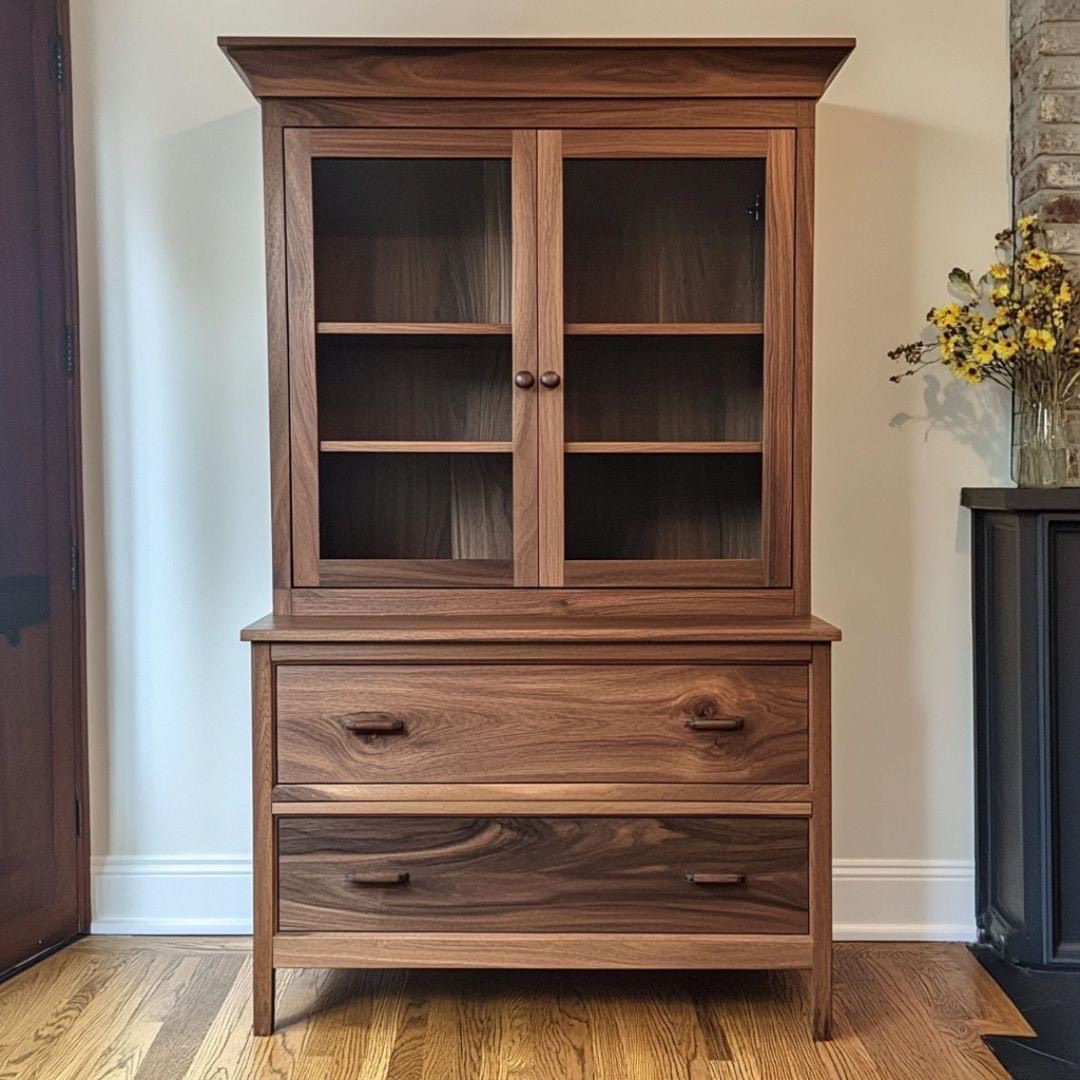
- Keepsake and heirloom pieces — solid walnut, maple, or oak is worth the money when the piece matters.
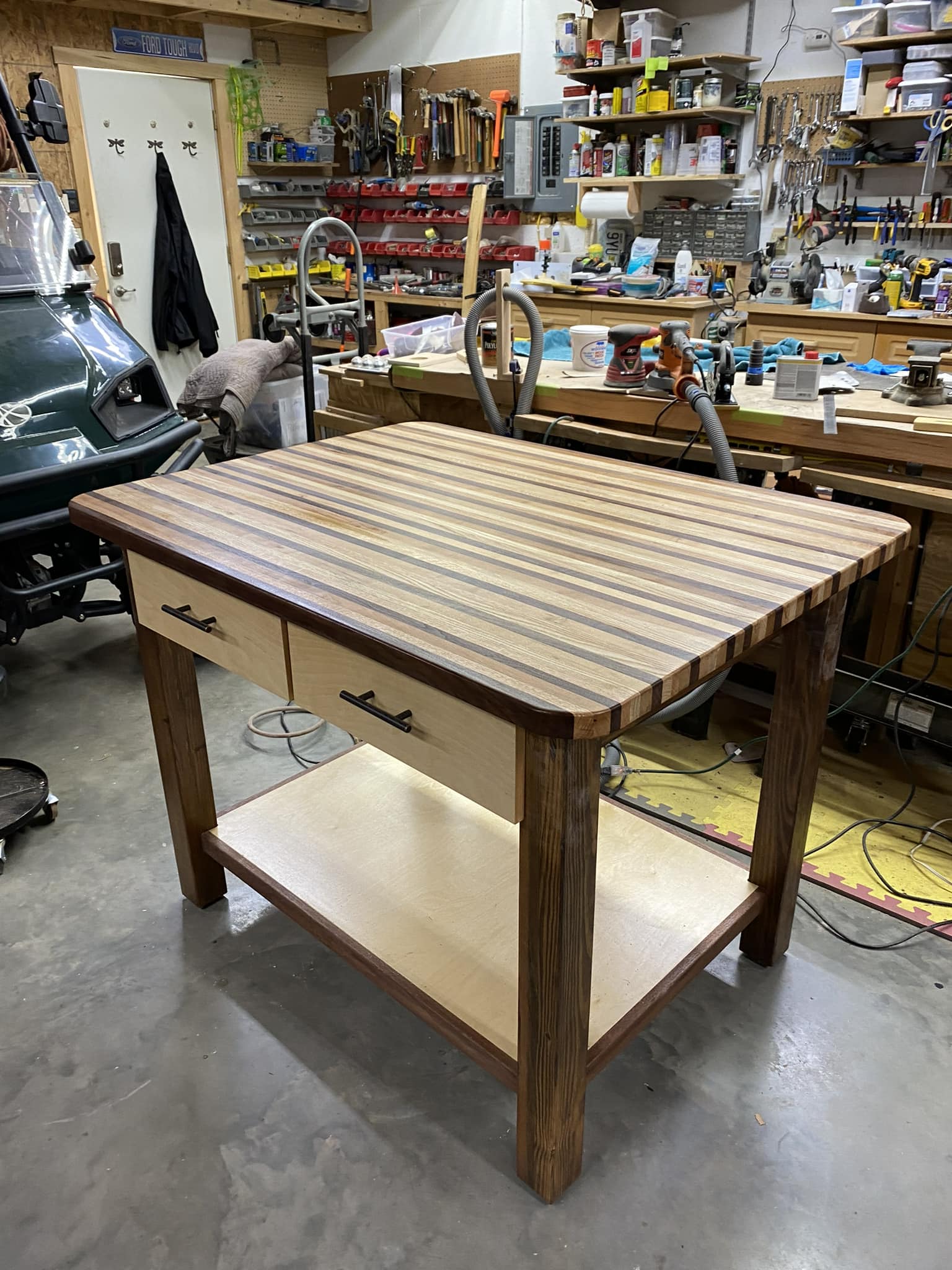
The complication is movement. Solid wood expands and contracts with humidity. A wide panel glued edge-to-edge will move; a tabletop needs room to breathe in its frame. Ignoring wood movement is how you end up with split tops and cracked joints. Design for it.
The practical shortcut
For most beginner projects, the decision is simpler than it looks:
- It’ll be painted → MDF (doors, boxes) or plywood (anything structural or shelving).
- It’ll be stained or natural finish → solid wood, or plywood with a quality face veneer.
- It needs to hold weight or screws at edges → plywood or solid wood. Not MDF.
- It might get wet or you’re outdoors → exterior-rated plywood or a moisture-resistant solid species (cedar, teak). Never MDF.
A note on plans
The choice of material shows up early in any good plan — a well-documented set of plans will tell you whether the designer intended plywood, MDF, or solid timber, and what dimensions to cut. If your plans leave you guessing what material to use or don’t include a cut list, you’re not working from a complete plan. Our review of woodworking plan libraries covers what to look for.